Psycho-Pass as a work of Artistic Satanism

Psycho-Pass as a work of Artistic Satanism

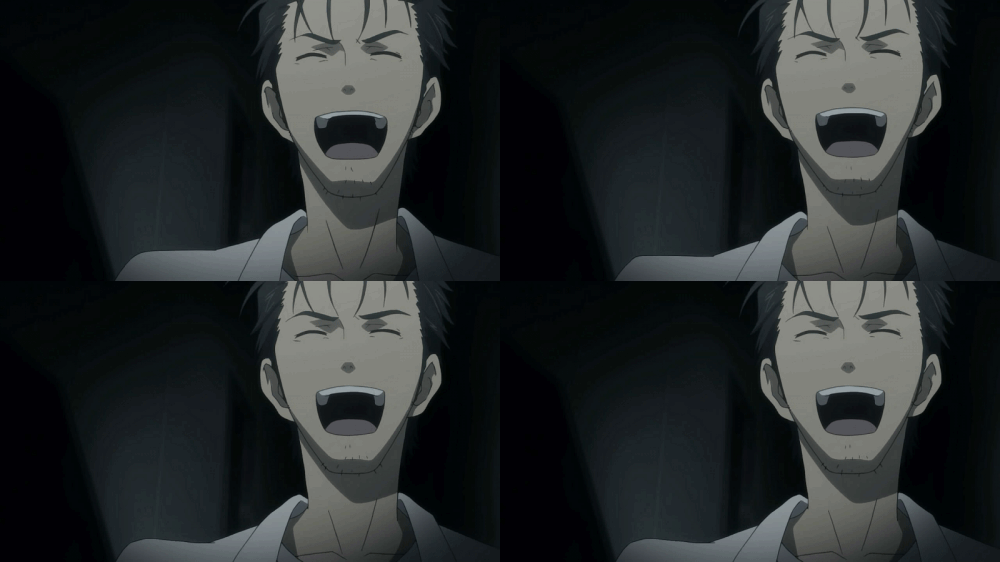
I know what you are thinking, Psycho-Pass and Christianity? Artistic Satanism? Morality? Is this guy for real? Or has Oscar, finally gone off the deep end? Is he trolling? What is this?
Thumbnail


Fortunately, for everyone, I have not gone bonkers, todavia no se me ha ido la olla, other such expressions, etc. Neither am I trolling—I think. I am, possibly, being serious.

No, ladies and gentlemen, brothers and sisters, comrades and friends, fellow primates; I only wish to present to you my theory that Psycho-Pass is a radical interpretation of the Judeo-Christianity myth through the lens of artistic Satanism. I do not know if anyone else has thought of this but as far as I know it is an original idea and I can claim it as my own.

First, a clarification is in order. Artistic Satanism has nothing to do with traditional medieval or modern day Satanism, in other words, no devil worship or evil behavior and rituals are involved. It is, rather, an intellectual tradition that goes to back to the Age of Enlightenment and extends even to our own day.

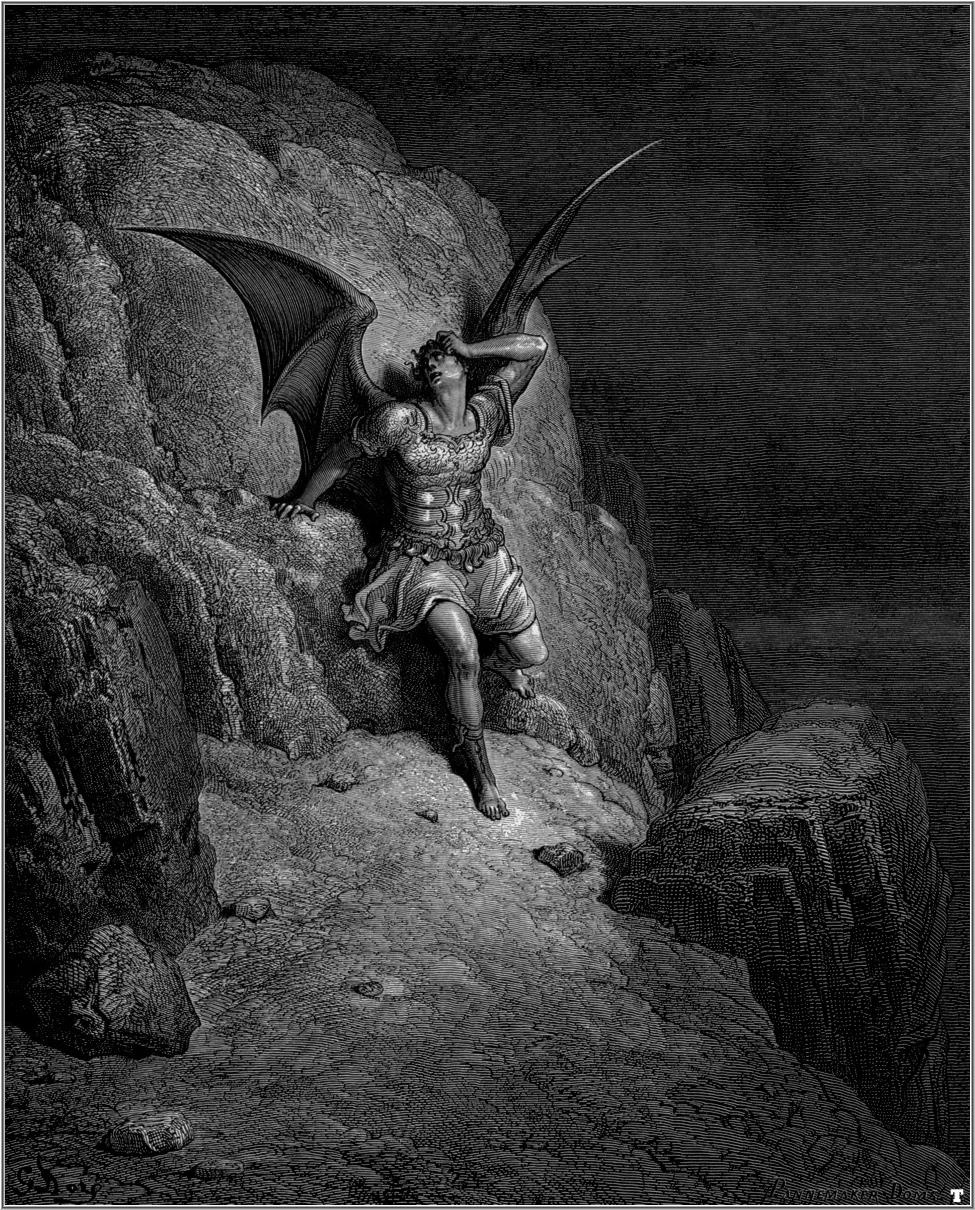
The point of departure for this lofty tradition is found in John Milton’s stunning and awe-inspiring Paradise Lost in which the great poet re-imagined Satan as a more sympathetic and, in a manner of speaking, “human” character, as opposed to the purely evil caricature found in older Christian tales and in Christian theology.

Thumbnail


That Milton himself did not intend to do this is, at bottom, irrelevant—as William Blake famously said, Milton was of the Devil’s Party without knowing it.

Later readers, like Blake and Byron, reinterpreted Paradise Lost as a work with a “Promethean” theme and message. In this reading, God is seen as an evil tyrant—a view supported by the Bible and Milton’s epic—and Satan as a flawed hero. This vision was then elaborated further by other artists and intellectuals for whom Satan became a symbol of political and cultural liberty and artistic creativity.
Thumbnail


This perspective can be found in Nietzsche’s works (BG&E, Twilight of the Idols, and so on and so on) and—in our own day and in a more popular frame of reference—in songs like Metallica’s “The Four Horsemen” in which the lyrics are written from the point of view of someone who fights against the agents of the apocalypse—agents of God now viewed as evil and enemies of mankind.

A revaluation of values, then, is the imperative in this tradition.

So much for artistic Satanism, but where does this leave us with regards to Psycho-Pass?

Thumbnail


If one pays attention to Psycho-Pass one will notice that religion is completely missing from the show—just like in Orwell’s 1984.
Thumbnail


This is because, as in the aforementioned novel, the criticism of totalitarianism here is absolute and thus encompasses the criticism of religion—the first and ultimate expression of totalitarianism.

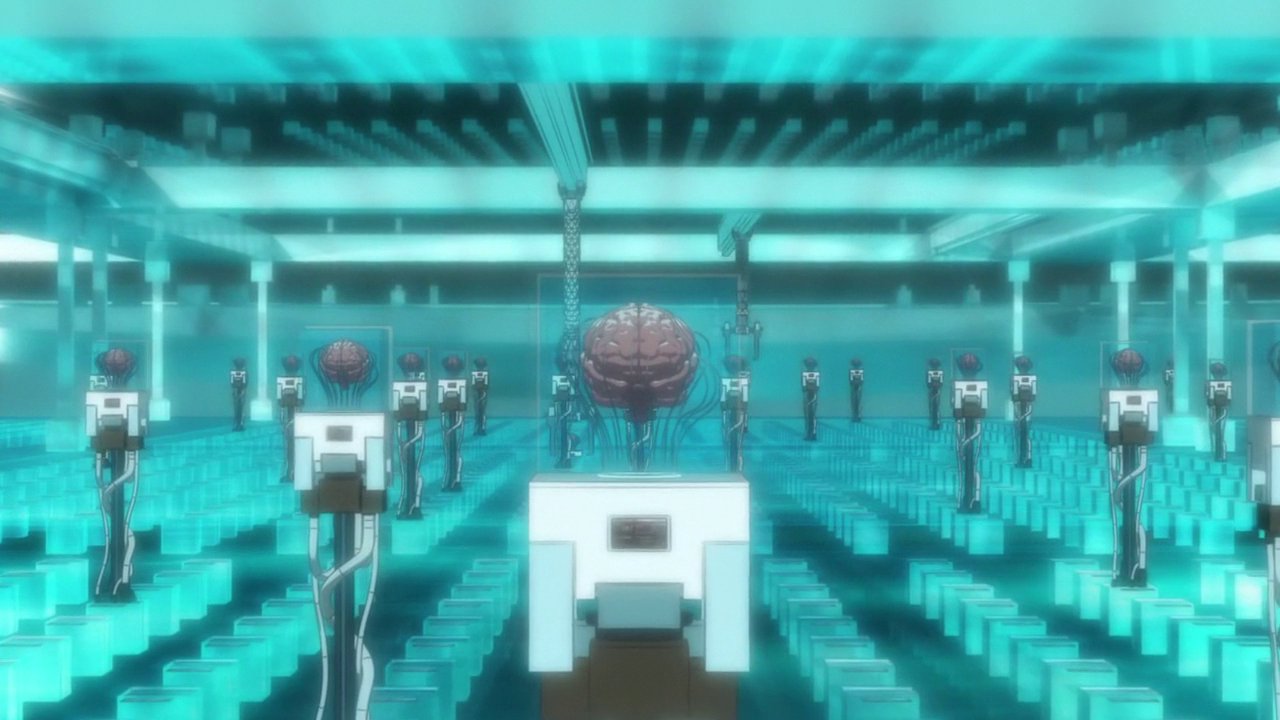
The absence of religion is also necessitated by the internal logic of the show. The Sibyl System is, first and foremost, a method of population control. Religions are, likewise, systems of control, but the Sibyl System cannot afford to have competitors—just like any real totalitarian system.
Thumbnail


These are, then, the first two clues to understand the true thematic spirit of the show. The most innovative and distinctive aspect of Abrahamic religion, as Nietzsche noted, is that it did not merely set up one god as the most important one, as the primus inter pares, but as the only real god while all other gods were either denied any reality or conceived as evil divinities—it is God who invents the Devil.

Similarly, the Sibyl System declares itself the only legitimate form of government and denounces all others as flawed forms which lead to chaos.

Furthermore, the more one compares God and the Sibyl System the more similarities one is bound to find. Heaven’s awful monarch views all disobedience, even the smallest deviation from its imperious decrees, as immoral. This is also the case with the Sibyl System.

Sibyl and Milton’s God issue diktats which are impossible for humans to obey. In spite of their knowledge that free will is a fiction, and that all actions and thoughts are determined or even predetermined, they penalize those who disobey as if they had freely chosen to rebel.

Like true totalitarians, they punish people for thought crimes and “felt” crimes: feeling the wrong emotions is subject to penalization. Breaking the laws is unnecessary, the mere thought or impulse to do so is sufficient to result in a verdict of guilt. To be accused is to be guilty; innocence is not a possible verdict in their jurisprudence.

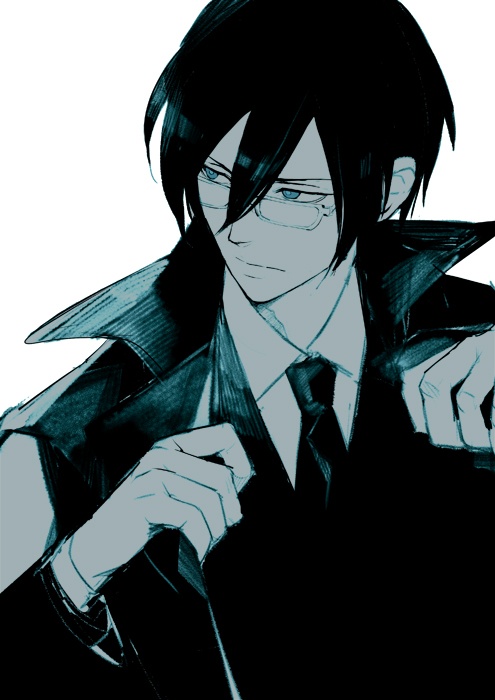
Consider, for instance, Ginoza’s struggle to keep his psycho-pass coefficient within acceptable levels.
Thumbnail


The effort he invests in this is an expression of his fear and loyalty towards Sibyl—the two exact sentiments that God and totalitarian tyrants demand—but also of his fear of, and contempt for, those who failed to follow Sibyl’s principal injunction (itself a parallel of God’s order to keep one’s purity) like his father or his former friend Kogami.

The drill is actually a trap, as the exercise is guaranteed to increase the levels of anxiety of the person practicing it, which will manifest itself as a higher coefficient figure, landing the faithful in a vicious circle from which the only escape is falling: precisely the outcome that befalls to Nobuchika.

This is the obvious and intended consequence as it ensures the increase of “criminal elements” which can be paraded and displayed to others as a warning of what happens to those who disobey, thus encouraging and enforcing stricter and more complete submission to Sibyl.

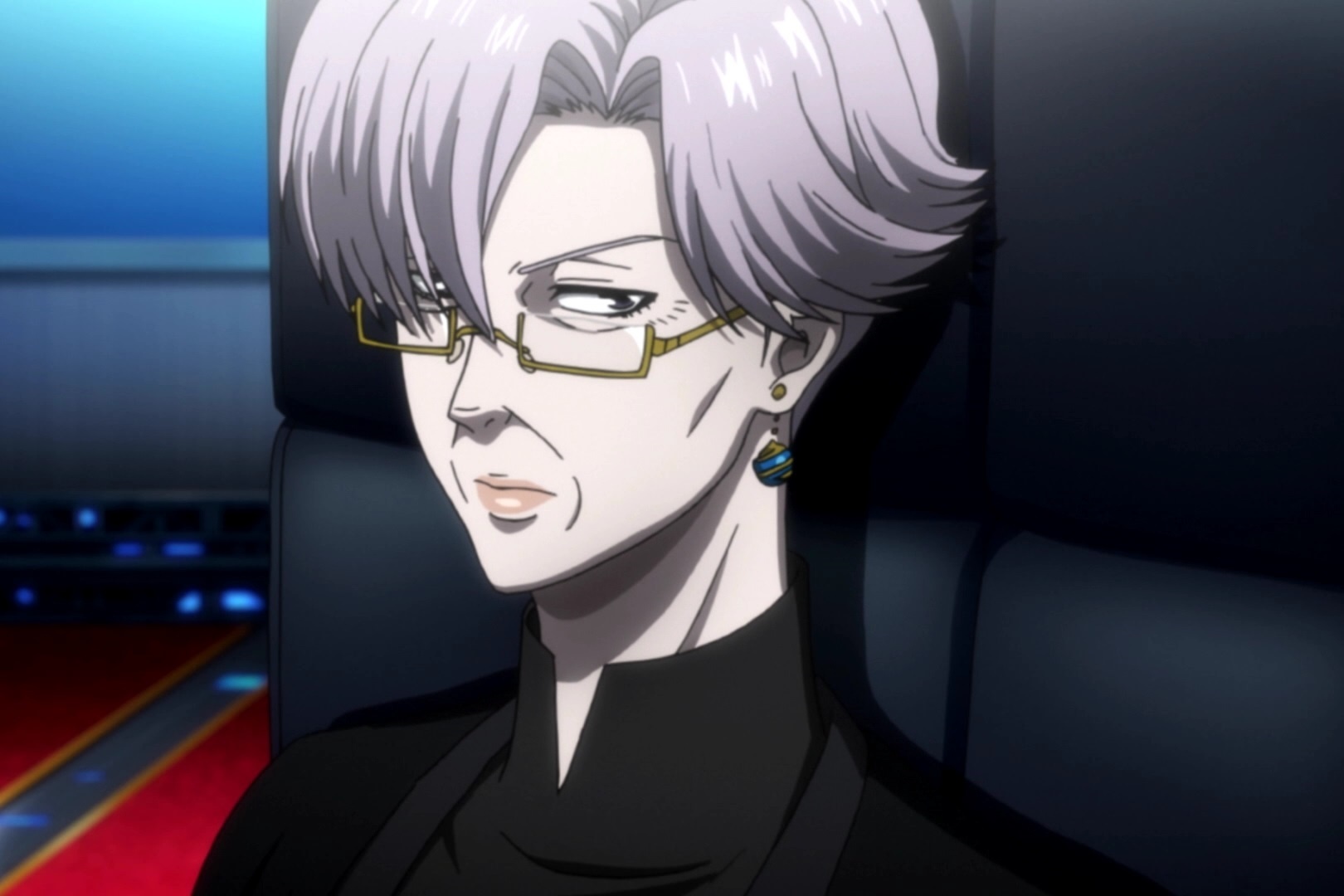
Additionally, it must be pointed out that Sibyl, like Yahweh/Allah, does not abide by the legal and moral code it imposes on others. Yahweh, in the Bible acts like a psychopath, Sibyl is composed of a collective of psychopaths. And, finally, just like God the Sibyl System assumes a “human” form—actually a robot with synthetic skin—in order to communicate with its human vassals. Here, Chief Kasei takes the place of Christ and the prophets.
Thumbnail


Into this toxic environment steps Shogo Makishima, the satanic figure of the series.

Thumbnail


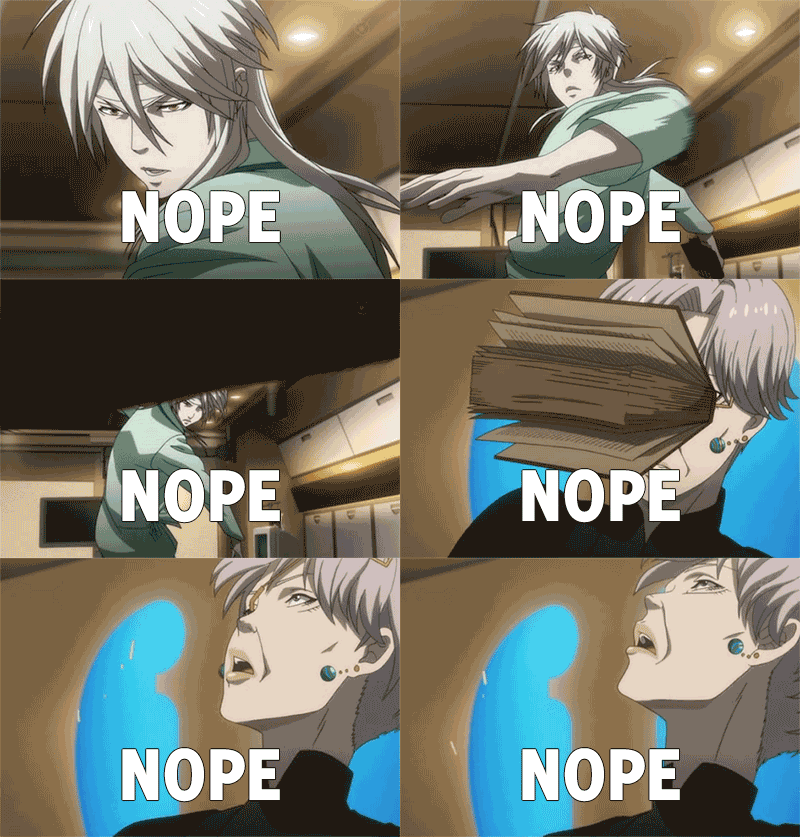
Like Satan with relation to God, Makishima shares the same nature as the Sibyl system, he is psychopathic. Unlike Sibyl, and God, and very much like the Miltonian Satan, Makishima the great shows no desire to become a tyrant and thus rejects Sibyl and plots its destruction.
Thumbnail


And we should remember the most salient traits of Makishima’s personality, he’s rational, intellectual, and has a fondness for art and culture. Not to mention that his fine white hair and the clear color of his dazzling eyes, also allude to Satan’s first name in Judeo-Christian myth: Lucifer, meaning “shining star.”

Obi-Wan 1984 Meme.jpg
Makishima’s thoughts on the Sibyl System

As is the case with Milton’s Satan, some of Makishima’s actions are morally questionable at best, but his in-roads into immorality only serve to highlight the “benign” dictator’s greater evil given how Sibyl, like Milton’s God, permits and even wishes for these acts of evil to take place in order to fulfill its plans: the acquisition of a new brain for the collective, in Sibyl’s case, and the chance to offer “Redemption” in God’s case.

With regards to both—this should almost go without saying—the purpose of the exercise is done ad majorem dei gloriam (or ad majorem Sibyl gloriam) rather than necessity. The “Redemption” only becomes necessary, and something worth receiving in light of the “Fall” caused by God through Satan, while Sibyl does not require Makishima’s brain to function. Caprice and greed are at work here, not benevolence.

As in the struggle between Good and Evil, the artists’ Satan and God, the interaction of these two rivals with humanity at large is the crucial element and what resolves what would otherwise be an eternal battle. In Psycho-Pass, the inhabitants and citizens of Japan take the place of humanity both before and after the Fall and the expulsion from the Garden of Eden, and various characters possess and share the traits of Adam, Lilith, Eve, Cain, Abel, and Seth.

Makishima promises knowledge of the truth, a decision to follow one’s own moral imperatives. His gift is the forbidden Apple. His counsel to his fellow countrymen is to use their reasoning abilities. He speaks in one voice with Byron’s Satan in Cain:

Think and endure,—and form an inner world
In your bossom—where the outward fails;
So shall you nearer be the spirtual
Nature, and war triumphant with your own.”

There is an old Soviet Joke about a Russian in art gallery viewing a painting of Adam and Eve in the Garden of Eden and when questioned, as a joke, about which nationality he would assign them, he replies—quite seriously—that they must be Soviet citizens. They find themselves with no clothes, no shelter, forbidden from consuming luxury goods, and they are told that this is paradise.

The situation that Makishima finds in Japan is in essence quite similar. While material wealth is obviously abundant, the inner life of man has been fundamentally debased by the Sibyl System. All art that does not conform to its standards and which can cause anxiety, which means all genuine art, is forbidden and only those whose work in music, literature, and the visual arts poses no threat to emotional stability.

Human relationships have taken two dichotomous routes, either the road of superficial attachment—represented by most people—or the route of exploitation: the basis of the relationship between the enforcers and the investigators. Alienation has become the norm and it is so complete that people are incapable of acting as moral agents—to the point that they cannot comprehend, let alone prevent, a blatant act of murder committed in the middle of a crowded street. The essentially the life that God had planned for Humans had the “Fall” not occurred.

What Makishima promises is not salvation, let alone paradise—the promise of the Sibyl System for the pure and chosen few—but simply, “an ordinary life for ordinary people.” The life he offers is a life of trial, of suffering, but it is a human life and a fulfilling one.

While fighting his battle against Sibyl, Makishima comes across the opportunity to test the subjects of the system that have taken up the task of enforcing compliance to its edicts, and reveal the true face of their ruler. Satan is, after all, known as a tempter and seducer. And it is his interactions with, and the effects of his actions on, Kogami, Tsunemori, and Kagari which serve to bring out this conflict between good and evil, and each has the chance to personify Adam and Eve, Cain and Abel.

Kogami is, as we know, the first to be tempted by his confrontations with Makishima.

Thumbnail


And his path, of guilty rebellion—in the manner of Adam and Even—followed by open rebellion, the way of Cain, is foreordained by his inner impulses, modified by the environment which surrounds him, to what he perceives as a threat. Kogami, contrary to what some people might believe, does not become a criminal when he openly rebels against Sibyl and takes it upon himself to kill Makishima.

Thumbnail


He falls from grace the second he decides to continue the investigation on the Makishima case which occurs prior to the beginning of the series. That is when he commits the unforgivable crimethink. The moment he takes that resolution is the moment that he takes it upon himself to decide what is right and wrong, when he discovers knowledge of good and evil. His choice to then take justice into his own hands is merely the consequence of that first act of disobedience.

Thus we can see that in seizing the right to determine his own moral values, to redefine his ethical concepts, Kogami reflects Eve’s rebellion against God’s Law. When he claims the power over life and death, wresting the monopoly of ultimate violence from Sibyl, he acts in the spirit of Cain, which necessitates his expulsion from the protection of the divine and, like Cain, Kogami is forced to go underground.

Part of the irony of the show lies in the fact that while Kogami does exact vengeance upon Makishima, in the guise of “justice,” showcasing his evolution from a mind-slave to an independent agent, this development was only made possible by the actions of the man Kogami hates the most. In the end, Makishima, by liberating Kogami, emerges victorious in their struggle.

Makishima Shogo Death
Victorious even in death.


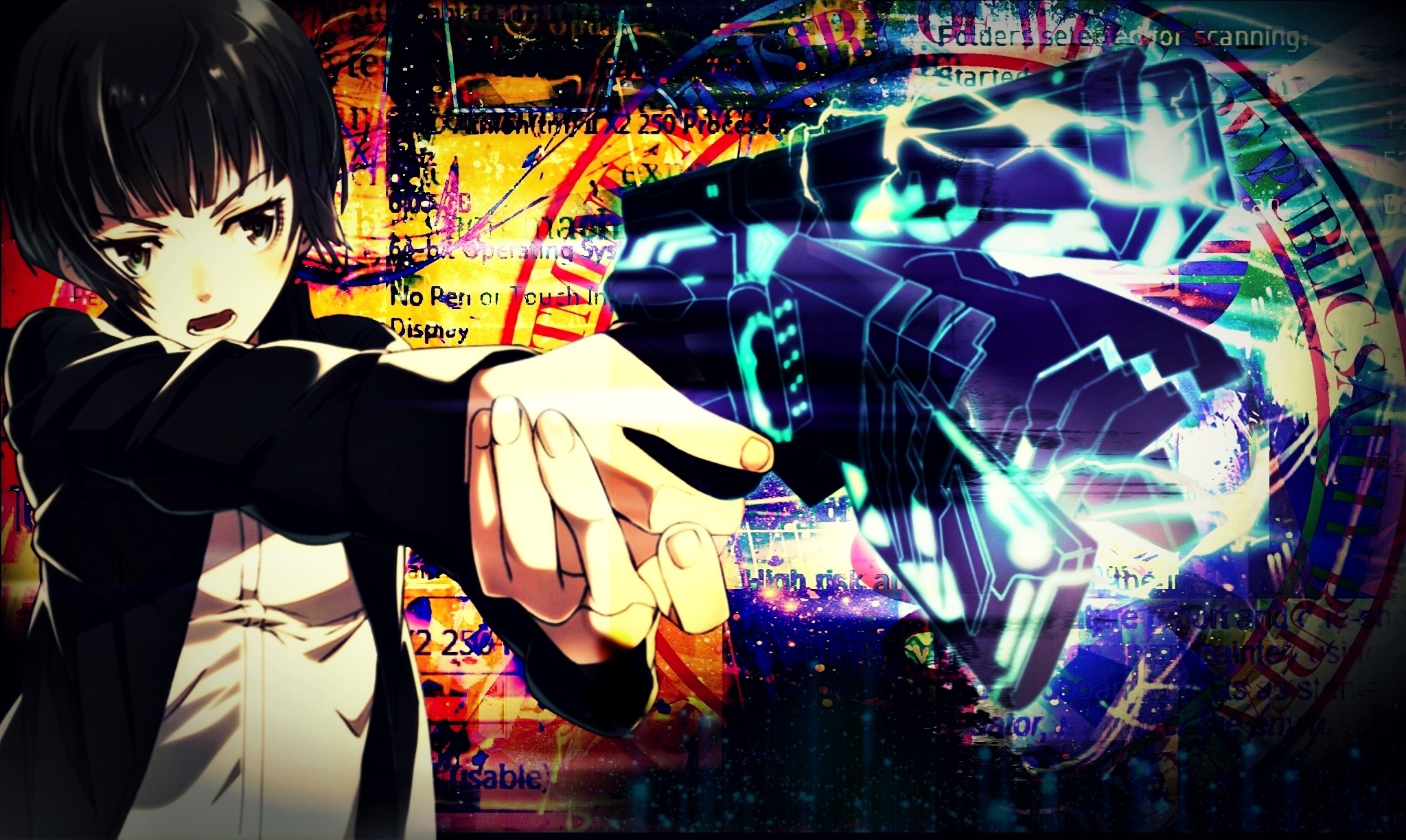
Tsunemori faces the same challenges as Kogami, but her innermost personality, reacts to them in crucially different way.


Thumbnail


In her own way, Tsunemori acquires the forbidden knowledge of good and evil but, contrary to Kogami, she rejects her own moral valuations and submits herself even more determinedly to the arbitrary rule of heaven. It is worth pointing out that Tsunemori only becomes a moral agent as a consequence of the actions of others—like Adam in the Bible who follows Eve into sin, but does not sin of his own will and due to his own inclinations.
Thumbnail


Finally, and to clarify what exactly gaining “knowledge of good and evil” means within the story, I will turn to a key plot development of the show.

Thumbnail


Shusei Kagari, it will be freely conceded, is only a minor character and exists mainly as a plot device—to provide the audience with a glimpse of the true nature of the Sibyl dictatorship. Nevertheless, he is essential to illustrate how the metaphor of gaining God’s forbidden knowledge is represented in the show.

Kagari is, like Milton, secretly of the Devil’s party. He hates and despises the Sibyl System and his repression of this resentment is not exceedingly successful. Of all the enforcers we see he is one who, by instinct, is the most disposed to rebel—in this we also see traces of Satan, Cain, and Eve.

However, he still acquiesces to the judgments of the Sibyl System. He remains, at bottom, one of the faithful and believes in the judgments made by the System because he considers the moral deliberations and verdicts of Sibyl to be beyond his ability to comprehend, let alone emulate, since he is under the impression that it is an impartial program that makes these decisions.

And yet, when he finally sees the true face of the system he realizes that the understanding of morality was always within his reach because Sibyl is in essence the product of human reasoning and thus, inherently flawed and not essentially superior to the thoughts of other humans. Like Adam and Even in the Garden, like Cain outside the Garden, he has become as a god.

It is only logical, and the inescapable outcome of this revelation and completely in line with the text and spirit of the Genesis story, that he should be sentenced to death.

Conclusion and TL;DR: Thus we can see that it is clear that in Psycho-Pass, with the combination of the intellectual and artistic Makishima, the totalitarian Sibyl System, and the development of the characters, we see a strain of the intellectual tradition of artistic satanism in our own day and in the anime medium.

So, what do you guys think?

RWBY Volume 4 Review.

So, RWBY‘s Volume 4 ended last Saturday and by now I think we—the fans of the show—have all had a chance to watch that last episode and, perhaps, take a few moments to think about this volume.

rwby-volume-4-wallpaper-by-logyra

Overall, I liked it.

Yes, the action which—along with the designs of the characters—is what drew people to the show initially, did take a bit of a backseat this season. There weren’t nearly as many fights this season as there were in previous ones, or at least that is the impression one gets from this volume. And most of them were not that exciting.

However, the fight against Tyrian, Salem’s Scorpion Faunus minion—and abject adulator—which spanned across two episodes, and involved six people, was simply amazing. It was definitely great to see two adult and fully trained fighters do battle.

In any case, the lack of action makes sense giving what happened at the end of Volume 3. All the characters, our main characters in particular, needed a bit of development and a bit of time to overcome the traumas of those last episodes of Volume 3, as well as their own personal inhibitions. All four members of the main cast, who were not together at any point this season, do rather well, and their personal stories, for the most part, come across as genuine.

The one exception to this was Weiss. Her development arc is just too cliché. All the elements of it are things we have seen before. The tyrannical and greedy father, who is not really a true member of the family—he’s actually a social climber, simply someone who married into the family—cynical and politically, and socially, myopic. The envious sibling who plots from the shadows in order to maneuver everything to a point where he will be the ultimate beneficiary.

The amiable butler who seems to be the person really running the house and who helps out the heroine. The absentee mother, probably terminally ill, who doesn’t really have a say in anything. The callous and flippant and superficial aristocracy. And, of course, the heroine who is alienated from her family and her society and who prefers the company of the staff to that of her own family.

Were we spared anything? Definitely doesn’t seem like it.

Among our antagonists, I am sad to say that we barely saw Mercury and Emerald, two interesting and visually striking characters—not to mention entertaining as well—very much this season. Of the new antagonists to which we were introduced we really only saw much of Tyrian, who is sadly, as far as his personality goes, very much an incarnation of the clichéd craven follower of the Big Bad. Salem, the Big Bad herself, remains being mysterious. We still do not know much about her motivations, although we do know that she can pretend to be caring and fair towards her subordinates when she wants.

Cinder, however, was quite engaging to watch. It was almost touching to see her barely able to speak, completely humbled, and physically weak and scarred. One might almost begin to feel sorry for her—if only one forgot that she did kill Pyrrha Nikos and helped to bring about the fall of Vale in the third volume.

Cinder Fall by AnimeFanNo.1.png

We do see that she is put through an exhaustive training regime by Salem in order to learn how to master her Maiden powers and recover from Ruby’s Silver Eyes God-mode attack and regain her strength. It is also visible that she feels less than enthusiastic about the psychic states of at least one of her allies, and that her feelings towards Salem seem to become a bit more antagonistic as the volume progresses.

Aside from the character development this volume also serve to set up what is going to happen in the following volumes, it is in that sense as well a transitional arc. What we have to look forward to will be the impact of Atlas self-imposed isolation on the rest of Remnant. How the fall of Mistral and Haven academy will be achieved is also of particular interest and will be exciting. And, of course, Cinder’s next encounter with team RWBY and their allies.

Plot and characters aside, the artwork—as I have said elsewhere—the animation and art of the show has improved by leaps and bounds, the new program that RT has chosen to use for RWBY is definitely more fitting for such a fantastic series than the previous reliable but amateurish program they used. The music is up to the same standards that we have come to expect from Jeff Williams and I will be sure to buy the soundtrack and the score as soon as they are released.

The dialogue, unfortunately, is still the show’s weakest spot. It averages out to the acceptable, and the humor is pretty good, but there are still far too many cheesy lines thrown out, and the timing for the jokes could do with a real improvement.

An Apology… and why I liked Rogue One

I have neglected this blog for far too long. While trying to balance everything in my life when I started to feel pressure it seems that I chose to neglect this blog. Well, that is something that I’ll fix before the year ends—for me—and something I’ll keep in mind for this year.

Hopefully, there are still people around who wish to read me. If not, I hope I will acquire some new readers. It should not be that hard, there are a ton of things to look forward to in the arts, especially film and anime/manga, for this year and a lot of things to keep us talking about culture and society throughout it.

So, getting back to business, let’s talk about that new Star Wars film

.rogue-one-wallpaper

By now I have seen Rogue One three times in the theaters. The first time I was lucky enough that one of my friends paid for the ticket. I thought I was in for another huge disappointment in the Star Wars­ universe after last year’s The Force Awakens­­.

You know what is coming now, of course. You know I’m going to praise the film. You have just read through the formulaic throat-clearing. Perhaps it was even cliché. Well, then let’s move on and see if we can avoid being more cliché while staying clear of spoilers.

I do want to make clear that I do not find Rogue One to be the best Star Wars film to date, let alone the best film ever, nor do I find the film to be flawless. I will simply go through the list of reasons that I can think of to justify the fact that I liked the film.


First of all, we may have the most original Star Wars film as far as characters go. At last we have a Star Wars film in which the main characters are regular people. Our “heroine” is, doubtlessly, resilient and stubborn and tough, but unlike previous leading female characters in the franchise, indeed in contrast to one in particular, almost everything she does is improvised and her survival always comes by the skin of her teeth.

She does not know how to do everything, she does not have a witty retort to everything, and she does not maintain her composure at all times. She is as dependent on her comrades for survival as they are on her, and has a clear knowledge that without them she cannot actually do anything substantial. At best, she can get by on her own.

Neither is she a woman or girl of unbreakable idealism. To the contrary, she is, as most people with her background would be, just someone looking for a peaceful life unwilling to risk herself. It is only the circumstances in which she finds herself and her few emotional attachments that push her into a heroic role.

rogue-one-felicity-jones-wallpaper

(spoilers, the scene above was not present in the film).

The same goes for the rest of the cast. Though Captain Cassian Andor is an experienced and sklled intelligence officer for the Alliance and a good enough fighter he is not the ace of the Rebels. Bodhi Rook is a competent pilot, but not much more than that, and constantly struggles to assert himself. Chirrut Imwe, the closest thing to a Jedi in this film (he does seem able of manipulate the force to some extent) would be nothing without Baze Malbus, his friend and bodyguard. Our characters become heroes by will and by accident.

This “normalcy”, as it were, extends even to the main antagonist of the film, Director Krennic, who for all his grandstanding and ruthless demeanor is unable to be in complete control at all times—a far cry from Moff Tarkin or Vader or Sidious who always appeared to be on top of everything that came their way, whose schemes could only be thwarted by the most unexpected of outcomes and near-miracles.

I would of course like to rave about K-2SO, the first droid we have seen in the Star Wars who is capable of thinking, hacking into computer systems, and fighting. R2 could only do the first two, and C-3PO only the first, while the droids of the Separatists were only proficient in the third, we never saw them actually thinking or doing anything else other than killing or trying to kill enemy soldiers.

rogue-one-by-spirit-of-adventure-wallpaper

Secondly, and this is related to the first point, we have a cast that knows how to act or rather, we have a director who knows what to do with the talents at his disposal and how bring out the best performances he can from them. It helps that most of the cast happen to be gifted actors, and that the script was free of cringe-worthy dialogue: there are no power convertors that need to be picked up from a Tosche station here, no monologues about the dreadfulness of sand, and no wanna-be Casanova talk in this film. The characters act and speak as one would expect them to do so.

Thirdly, this is the grittiest and darkest Star Wars film to date. In tone, and not only in tone, this is much more a traditional war film than a Star Wars feature. It has more in common with Black Hawk Down or Saving Private Ryan than the other films of the series—as other critics have already remarked. In this film, an attack on a city means exactly what you would expect it to mean, the slaughter and destruction of civilian lives. Facing a superior force means what it usually means in real life—an overwhelming defeat.

The action itself is exhausting, and meant to be exhausting, rather than an explosion fest for the sake of entertainment in the style of Michael Bay. The increase in scale and destructive scope is also gradual, from small encounters to skirmishes to the final all-out battle at the end of the film, and it parallels the development of the plot. This means that when the final battle begins it has its proper air of grandiosity and solemnity. The ending itself presents us with a competitor for the second darkest and most tragic end to a Star Wars saga.

Fourthly, while the plot is not the most original thing we have seen in Star Wars but it develops at a steady pace and the plot-twists, brought about by the an accumulation of contingencies rather than a grand master plan, allows the film to have breathing space and to change from what is a mere reconnaissance and intelligence mission to a battle for the future of the republic.

Fifthly, the film—in stark contrast to The Force Awakens—does its best not to rely on nostalgia. The score is absolutely different, main characters from previous films are almost completely absent; most of the familiar faces are of side-characters of the Original Trilogy. And in spite of the fact that world-building for this film was constrained by the fact that it takes place right before the events of the first film and thus finds itself in a world that is already very detailed, it does its best to present us with new vistas and technological achievements in the Star Wars universe. All the planets and moons we see in the film, bar the familiar moon of Yavin IV, are new additions to the franchise. Even some of the ships are things we have never seen before.

As I said, this film is far from perfect. It’s main flaw, I would say, is that it is an anthology film. I believe that it will be difficult for those who are not already fans of the franchise to be interested in this film, unless they are willing to read up a bit on Wikipedia about the universe in which this film is set.


Overall, I rate this film rather highly, probably a solid eight and heartily recommend it to other viewers.

Summer 2016: Alderamin on the Sky Review

Hello, ladies and gentlemen, brothers and sisters, comrades and friends. I apologize for the lack of activity in the past two months (until I checked the site I thought it had only been a few weeks) but I have been rather busy. You can expect quite a few articles in the coming days, though. And so, to restart activity around here, I will post my thoughts on Alderamin on the Sky.

Alderamin on the Sky Wallpaper

When I first started watching Alderamin on the Sky, I confess that I was not impressed by the series. Its first episode certainly does not promise much, by introducing characters who, for the most part, one is easily lead to believe will turn out to be little more than animated tropes. Nevertheless, there was enough to promise something better.


First, there was the relatively original world building. For once, we are not looking at merely an alternative world version of Japan or America or Britain, or a fictional nation based on any those countries. Instead, we are presented with nations based on India. Secondly, though it is, in part, a fantasy series, it did not seem to rely very much on the magical or supernatural elements of the story. Thirdly, and most importantly, there was Ikta Solork, the main character of this story who was, from the get-go, not an anti-hero or a hero or a villain but an unwilling hero, someone who is forced by circumstance to do heroic deeds.


As the series progressed, the writers built on these strengths and developed other aspects of the story. Torway, Matthew, Haroma, and Princess Chamille­—characters I had assumed would be nothing more than stock characters—receive a good deal of development and actually become characters in a story with their own motivations and emotions. Then, there were the internal politics of the Katjavarna Empire, for instance, the conflicts between the Remeon and the Igsem family, which were interesting in themselves. Finally, there were the thrilling and unexpected displays of tactical maneuvers and strategy on the part of Ikta Solork and, in the final few episodes, of Jean Alkiniks. All of which was accompanied with expansions of our view of the world of Alderamin on the Sky.


Whether the artistic style of Alderamin on the Sky—which differs markedly from the style of the light novels and the manga—is good or bad I will leave to others to discuss. I found it unfamiliar at first but quickly became accustomed to it. The animation, it should go without saying, was quite pleasing to the eye as well.


Overall, and despite a weak start, Alderamin on the Sky proved a very entertaining show, and one of the best, in my view third best, series of the summer season of 2016. I will now look forward to any further seasons which might be adapted onto the screen.

Anime Review: 91 Days Episodes 2 and 3

91 Days Wallpaper

Though I have delayed writing a review of the two new episodes of 91 Days, it has not been due to a lack of enthusiasm for the show. Indeed, my opinion so far is that it is, along with Orange—more on that one later—the best anime of the season.

The only flaws I have seen so far in this anime, and these are so trivial that you could easily accuse me of pedantic nitpicking. First of all, instead of being openly set in a real city in the States it is set in a fictional city which seems to have the same infrastructure and landmarks but with a different name. I still fail to understand the reason for that. Secondly, there is a lack of non-Italian American characters in this anime­—the only cop we have encountered so far is not even Irish! Rather inaccurate in my view.

That aside, the episodes have been engaging terms of the character dynamics and the action scenes. Avilio’s infiltration into the ranks of of the Vanetti Family, in pursuit of his revenge, was handled very deftly and convincingly. We truly do feel that Avilio is willing to do anything to gain the trust of his mortal enemies in order to accomplish his goals. Colteo’s hesitance to go along with his friend’s schemes provides a nice moral counterweight and increases the depth of the story and of both characters. The members of the Vanetti and Orco families, the only two families which have been introduced so far, are colorful and each of them has a unique personality, even if at the moment they seem to be rather superficial.

The depiction of the American mafia during the time period in question seems to be, to me at least, rather accurate, especially with regards to the internal politics of mafia families and the Machiavellian agreements, plots, and intrigues that take place between them. This is a change of taste and a change of pace from the usual portrayal of American mob families in anime.

As a bonus there are several nods and references to great American films about the mafia and gangs in general, from the writing of certain characters, to the direction of several scenes, as well as the settings. Avilio’s story has some similarities to Amsterdam Valon’s (from Gangs of New York) for example; while Vincent, Vanno, Nero, and Valbero appear to based on, or have at least share certain similarities with, Vito, Santino, and Michael Corleone and Tom Hagen respectively. The wedding on the second episode is clearly a reference to the opening scene of The Godfather.

91 Days Godfather Style Wallpaper

Finally, I will admit that the music has grown on me with the last two episodes. On that note, I just realized that the same artist who gave us Tokyo Ghoul’s wonderful opening—“Unravel”—performs the opening theme.

Let us hope that the upcoming episodes will maintain, if not surpass, the standards set by this first quarter of the show. If you like stories about the mafia this anime, at the moment, is a must watch for you.

Thanks for reading, don’t forget to like, share, comment, and subscribe.

OFG

Literary Review: The Book of Disquiet

Fernando Pessoa

In spite of much procrastination, and a few false starts, I have finally gotten through a copy of Fernando Pessoa’s The Book of Disquiet that a friend of mine was kind enough to buy for me as a gift. I have to say that I was initially excited to have come into possession of this work. After reading Pessoa’s Poem in a Straight Line I was eager to read more of him, his words resonated within me in a way that very few authors, let alone individual poems, have done. Additionally, having heard that Pessoa’s magnum opus was written in fragments reminiscent of aphorisms—my favorite form of prose*—and that he mixed poetry with prose I made reading his book a priority. . . . I confess that I was disappointed. While it is beautifully written in clear and straightforward prose—and Pessoa shows an ability to churn out splendid metaphors which evoke vivid imagery—the work itself is repetitive and rather monotonous; that the tone is rather melancholic and depressive does not help to make it more enjoyable. This is, in a sense, part of the brilliance, of the book. After all, the disjointed fragments are the diary entries of the fictitious Bernardo Soares—I place partly in quotation marks because he is, and at the same time is not, Pessoa himself—who is very much a pitiful and miserable character. At this point, I would like to remark that while Portuguese and Brazilian literary critics often refer to it as the definitive anti-novel, or the negation of the novel, they are wildly exaggerating: it is simply a semi-fictional diary. . . . While one can respect and even admire the artistic vision and originality of Pessoa, there is not much beauty or pleasure to be found here. Neither is there much to be gained in the way of wisdom, worldly or of another kind, very little of what Pessoa says here has not been said more lucidly and wittily and beautifully by Schopenhauer or Nietzsche—from both of whom Pessoa borrows heavily in terms of themes. Though it is not by any means a bad book, it is most certainly not a great one—the “sublime”, to use the preferred in-word of critics, does not touch it.—The Book of Disquiet has value only as a pioneering work of literature and like all adventurous works it is destined to be emulated and thus superseded.

OFG

P. S. To those who are here only to read anime reviews I ask for some indulgence, this is blog is, after all, supposed to be more than just about anime.

*I am fortunate enough to be sufficiently fluent in Portuguese to have been able to read it in the original language rather than a translation, therefore I cannot vouch for how Pessoa’s prose is rendered in English.

Anime Review: Orange Episode 2

Orange Wallpaper

I have to say that it is a pleasure to watch a series that takes to introduce its characters to the audience and to develop them. And this is what Orange does in its second episode—I have heard that they have actually adapted one chapter per episode so far, one can only hope that they will not rush things as the series progresses.

This episode we are given broader and deeper views of the personalities of some of its main characters, Naho and Kakeru.

In this episode, we see Suwa and Kakeru bonding over sports and seeing Kakeru begin to overcome some of his natural shyness through the prompting of his new friends. Meanwhile, Naho has to learn how to deal with her new found feelings for Kakeru and the news that she receives from the future that Kakeru will die at some point in the future. I must admit that it is rather sweet to watch Naho struggle with her new feelings and with the fear of rejection and public embarrassment. Fortunately, for her, Kakeru shares her feelings, although seeing how dense they both are it might take them a while to actually realize that their feelings are mutual.

She also learns that it is not so easy to follow the instructions she receives from the future in the letters addressed to her from her future self. In a sense, she discovers that she must actually want to do the things that her future self recommends she should do, rather than simply bowing to the wishes of the future. This is a very realistic depiction of how people would behave if they found themselves in that situation. Selflessness and a desire to please others can only take one so far, after all. The crucial and life-changing decision she makes at the end of the episode is also quite inspiring and admirable.

We also learn this episode that aside from being a very kind and timid girl, Naho is also very motherly. She cooks, she cleans, and she sows for her own pleasure, and is willing to use her skills for the benefit of her friends.

In the background of the episode, we have some commentary about the relationships between parents and their offspring at that stage in their life. Some parents, like Saku’s, begin to encourage independence in their children while others continue to pamper them—absence and presence of parents is an underlying theme in this episode. The episode also touches, albeit rather briefly, on how parents, in this case Naho’s react to first awakenings of romantic and sexual desire in their children.

The music is still underwhelming, but other than that it was an all around enjoyable experience to watch this episode. The animation, of course, is still spectacular.


Well, that’s it for now. Like, share, subscribe, and comment if you wish.


OFG

Anime Season Overview: Summer 2016

Given how it is too early in the season to write detailed and individual reviews for most of the shows I have chosen to watch, with the exception of Berserk (2016) for which I will write a separate review, I will simply provide a brief summary of the shows I am going to watch this season and my first impressions of them.

Orange Wallpaper

First in the list is Orange, a sci-fi, romance, school shoujo anime about a high school girl, Takamiya Naho, who receives letters from herself ten years in the future, which contain instructions of things she has to do in order to avoid feeling regret later on in life. She is also told that one of her friends, a new transfer student, will die at some point in the future, and she is advised to keep an eye on him and stay close to him. That is the basic premise of the show. We also meet her merry group of friends in this first episode, all of whom have a distinct personality; although, to those familiar with the genre, they might seem somewhat cliché. The animation is fluid and the art is beautiful and very colorful, as is often the case with shoujo anime. The opening and the ending themes are rather underwhelming, though. So far there is a lack of actual science fiction elements, it is not explained how letters from the future were delivered to Naho, but since it is only the first episode I don’t think one should worry so much yet. I am told that the show is based on a manga but I have not read it, so it is all new to me. My conclusion is that it looks promising but it might be too early to recommend it to anyone.

Taboo Tattoo Wallpaper

Second on the list is Taboo Tattoo a supernatural action shounen. The premise of the show is as follows. The main character, Seigi, is a middle school student who practices judo and has already begun a career as a vigilante justice, beating up robbers and bullies. One day he saves what appears to be a beggar from a couple of thugs. The man in return gives him a special tattoo that turns out to be a secret weapon developed by the United States to fight China (of course, the creators of the anime felt that giving China a different name was somehow necessary). This, inevitably, lands him in a bit of hot water. Apart from establishing the background for the show, this first episode also introduces the other supporting characters. My first impression is that the animation is good, and the designs are great in general, although the childhood friend seems a bit too developed for a middle-schooler. It strikes me like a very entertaining show nevertheless.

Alderamin on the Sky Wallpaper

The third anime I will talk about is Alderamin on the Sky (if you think I am going to use its Japanese name, you must be off your trolley). This is one is a military fantasy anime. The story is set in the Empire of Katjvarna, and most of the clothing, architecture, and names have an Indian motif, or at least something that could be passed off as Indian—for the most part at least. The Empire is at war with the republic of Kiorka—I have no idea what nation they are based on but we did not see much of it in the first episode. The story will focus on an anti-hero called Ikta and his female friend, Igsem, who is the hero. As for my impressions, I am still undecided whether the honesty with which the show introduces its supporting cast as stock characters is something to be commended or not—hopefully they will get some development as the story progresses. The rest though is good, from the animation to the world building.

91 Days Wallpaper

Finally, there is 91 Days. This is truly the anime I have been looking forward to the most. It is set in the US during the Prohibition Era and follows a character called Avilio who is seeking revenge against the mafia family that killed his parents and his younger sibling using the illegal bootlegging business to get in contact with them. While the naming of the city in which the story takes place, Lawless, annoys me a bit because it is obviously New York City, the anime is for the most part historically accurate so far, from the clothing to the cars to the buildings to the guns used by the mob men. The animation and style are perfectly suited to the dark theme of the show, very grey and with a lot of dark colors, and the music also fits the time period and mood of the show.

Well, that’s it for now, I will write my review of Berserk and of the two new episodes a bit later.

Don’t forget to like, share, comment, and subscribe.

OFG

P.S. Can any of you really blame me for not having written anything last weekend?

Anime Review: Joker Game

I know it is late in the day, and that I’ve put off writing this review for a few days, but here it is, just before the summer season officially starts, The Untimely Meditations review of Joker Game.

Joker Game Wallpaper

First, a quick summary, for those of you who didn’t watch the show. Joker Game is set during the years immediately prior to WWII, starting with 1937, and goes on until the first years of the war, before the bombing of Pearl Harbor. The premise of the show is as follows, and this is unnecessarily repeated in every episode: the Japanese Army has set up a secret service composed of members drawn from the civilian population­—rather than from among the military—called “D-Agency”, which has a rigorous training program that only eight students, all of them men, manage to pass—these are most of the main characters. The other two main characters are Lieutenant Colonel Yuuki, the spymaster, and Lieutenant Sakuma, who acts as a liaison between D-Agency and the Army, he is also the only the character who is not a spy.

As we know, there is an inherent tendency in spy novels and films and TV shows toward the episodic. This is simply a flaw that not even the best can avoid, and Joker Game is no exception. One should not, therefore, be too critical of the show on that point, for the same charge could be laid against the Bourne novels and films, and the James Bond novels and films—among countless other spy series.

However, what all spy fiction does, in order to compensate for the inevitable repetitiveness of the stories, is to focus on a character and ensure that he—this a male dominated genre, sorry girls—will be memorable; and that the audience will enjoy watching his adventures. Development in itself is not a goal of the spy genre, at least not in my view, it is merely a bonus. It is on this score that I would make my first criticism of Joker Game. Due to the small number of episodes, and the large cast, I doubt that any of the characters in this show will stick out in the memories of most of the viewers. Every character gets an episode or two in which they are assigned a mission and it gives us a chance to see how they fare, ideally, that should help to differentiate between them—a goal that is not achieved for reasons I will cite later. Indeed, the only character that we remember, by name, at the end of the series is Lieutenant Colonel Yuuki, who appears or is mentioned in most episodes.

Lieutenant Colonel Yuuki

(The spymaster).

To its merit, Joker Game, unlike the other franchises I mentioned, is not a show about superspies, at least not technically, and there are almost no explosions and very few action scenes. It is far more reminiscent of Tinker Tailor Soldier Spy. Most of the series depicts a far more realistic method of gathering intelligence, observing others, holding conversations with other spies—to try to obtain information or sway them to their side—and with sources of information, and deals very ably with the underworld of the intelligence community. While we are on the subject, I would like to comment on the cinematography and the animation, which fits perfectly with the genre and the nature of the show, in the use of shadows and colors (greys, browns, blacks, beige). Likewise, the music is faithful to the period in which the story is set, and features a lot of jazz pieces and blues songs.

The one great failing of the show, to which I alluded earlier, is that we never feel the excitement of wondering whether or not the spies of D-Agency will surmount their obstacles. While they are not, with one exception I will not mention because I don’t want to provide spoilers, men of action like James Bond who survive through explosions and shootouts that would be the end of most men, they are so intellectually superior to all their opponents that, by the sixth episode, we know that no matter what happens the men from D-Agency will manage to outwit their opponents. The only character who has to prove himself up to the mission allotted to him, and who experiences a moment of crisis that he has to overcome, and with whom we can identify, is Lieutenant Sakuma—the only main character who is not a spy.

Lieutenant Sakuma

(The lieutenant).

This, combined with the fact that all the men of D-Agency have the “businessman” personality makes it impossible to distinguish properly between one spy and the next, unless one commits to memory the appearance of every single one of them. On that note, I believe that this is precisely the reason why so many viewers liked Sakuma so much so soon. In many ways it is better to approach Joker Game as if it were a series of different disconnected stories, each episode arc about one of the spies, with a lose thread tying it all together—but I hardly think that was the purpose of the show.

Finally, there has been some controversy about the historical accuracy of the show. It is worth noting that Joker Game does place a disclaimer at the beginning of each episode, but this is not likely to satisfy most fans as an acceptable excuse. In my opinion, offered with absolutely no humility, the show is a hit-and-miss, historically speaking, as far as facts and the tone go. There are moments and facts which are very historically accurate, for instance, while it might not be particularly appealing to hear about how small and outnumbered the French resistance was in WWII, it is rather true to reality. Though people, especially the French, like to make much of the resistance to Nazism, the truth is that most people didn’t display much aversion to Nazism—Sartre infamously advanced his career as a playwright through German patronage, and apart from writing a few essays in illegal magazines didn’t do much to aid la résistance. However, they miss with Hanato’s mission, the character in the episode of the French resistance. He was sent to France to investigate the resistance in June 1939, I believe it was, before the war had started, and thus before there was a resistance to investigate, and he is taken off the field and sent on another mission around mid-1940, a few weeks after the Fall of France. In other words, too soon to have obtained any actual valuable information for Japan.

On the tone, it portrays very realistically the mixture of desperation, self-confidence, and resignation to the war present in both the public and the intelligence agencies of both sides. On the other hand, every episode set in China, especially in Manchuria—or Manchukuo as the Japanese baptized it—is jarring to anyone who knows the history of the Second World War because there is a complete absence of gravitas. One would be led to believe that life in Japanese-occupied China was quite peaceful and comfortable. Indeed, the show is guilty of whitewashing the history of Japan before and during WWII. But I guess that it is a bit much to expect this sort of national self-criticism from an anime show—then again, the show sells itself on the claim that it is realistic and serious.

Overall, I found the episodes themselves somewhat enjoyable, the music was fine, but there is nothing to compel the viewer to watch the entire series. One would do just as well only watching the first four and leaving it at that.

I give it a 6, following the MAL rating score.

Well, that will be all for today, and with that I say farewell to a rather disappointing season.

Don’t forget to like, share, follow—if you haven’t done so already. Tell me what you thought of the review and the show in the comments below.

OFG